Last Updated on September 21, 2021
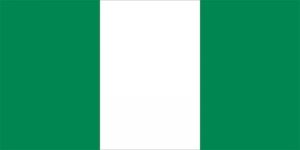
The flag of the Federal Republic of Nigeria was designed in 1959 and officially adopted on 1 October 1960. The flag of Nigeria is comprised of three vertical stripes of the same dimensions. The bands at the left and right borders are green while the central one is white.
Table of Contents
Brief History of the Flag of Nigeria
A young scholar, by the name of Michael Taiwo Akinkunmi, designed the Nigerian flag in 1959. At the time, Taiwo was a 23-year-old student at the Norwich Technical College in London, England, when he came across an advertisement requesting submissions for the design of the new national flag of Nigeria. Taiwo’s original design contained a red radiating sun badge in the central white vertical stripe, with green vertical bands on either side. However, judges voted for the removal of the badge from the national flag, which has remained unchanged since its adaptation in 1959. The flag was first flown when Nigeria became independent from the United Kingdom on October 1st, 1960.
Meaning Behind the Colours of the Flag of Nigeria
The Nigerian flag has three vertical bands of green, white, green. The two green stripes represent natural wealth, and the white represents peace and unity.
Similar to most countries, Nigeria has specific ensigns for civil authorities. It features green and white bands in the canton, and a red field, and naval vessels. There are several variations of the Nigerian flag, which include the state flag, similar to the original design of the national flag but features a coat of arms at the center.